
-

Fetal Echocardiography
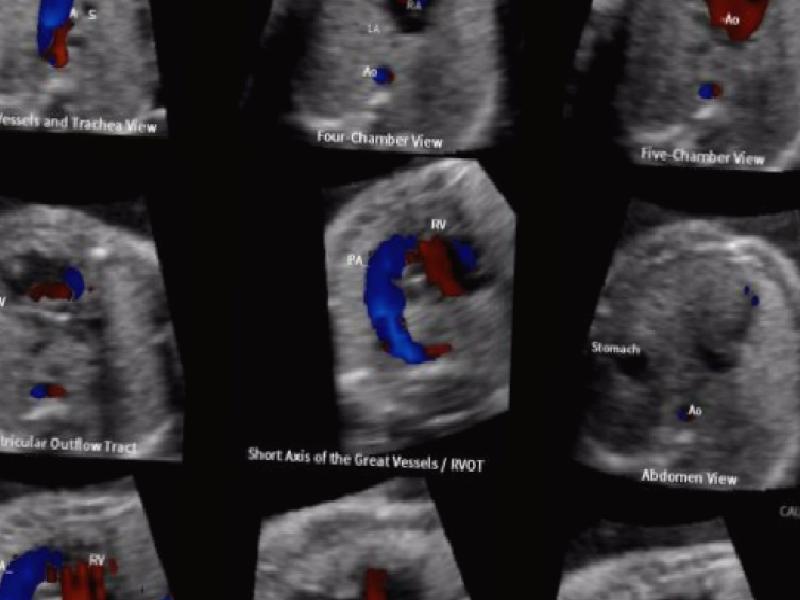
Fetal Echocardiography is an ultrasound method that can be performed from the 16th week of pregnancy and is performed on the abdominal skin of the mother. It is also called as “fetal echo” for short. It is a special ultrasound method that the Perinatology (Ridic Pregnancy) Specialist examines with special probes developed for the baby’s heart. Usually 18-23 weeks of pregnancy. It is performed during detailed fetal ultrasonography between weeks of However, if a suspicious finding is detected in the fetus, it can be performed in any period of pregnancy. With the use of color Doppler during the examination, the majority of “congenital heart diseases” of the baby in the mother’s womb can be diagnosed. Fetal echo, which is a special ultrasound method, has no harm or side effects to you or your baby. It can be applied at any time of the day without requiring a special situation such as hunger or satiety. The duration of ultrasound is 20-30 minutes on average, depending on some factors such as the position of the baby, its position in the womb, whether it is active and mobile, the location of the baby’s partner (placenta), the weight of the mother, and the structure of the abdominal wall. Fetal echocardiography is particularly recommended. These;
Conditions suspected of having an abnormality in the baby’s heart during routine ultrasonography,
Having a family history of congenital heart disease, especially in the mother
– Exposure of the mother to some agents (teratogens), drugs or infections that cause developmental disorders in the baby,
– Use of certain drugs and substances,
– Excessive alcohol consumption of the mother,
– Mother’s exposure to rubella, cytomegalovirus infection and exposure to high-dose ionizing radiation during the first trimester of pregnancy
– Diabetes in the mother. In cases where diabetes is not controlled in the early period, the risk of congenital heart disease increases from 0.6-0.8 percent to 4-6%. This risk ratio is 14 percent for babies of mothers with phenylketonuria.
– Connective tissue diseases in the mother.
Congenital heart diseases are one of the most frequently missed anomalies in prenatal ultrasound studies. Prenatal diagnosis of these diseases significantly affects the course of the patient after birth, especially in some congenital heart diseases. In addition to ultrasonography scans, the frequency of which is increasing in the world, fetal heart evaluation is increasingly demanded. Fetal echocardiography is primarily performed on expectant mothers who are in the risk group. However, it was observed that 90 percent of the anomalies found in routine fetal echocardiography scans were detected in the babies of expectant mothers who had no risk. In other words, the fact that the mother does not carry any risk does not mean that the baby will not have congenital heart diseases. For this reason, it is important for all expectant mothers to have fetal echocardiography scanned by a Perinatology (Risky Pregnancy) Specialist.
