
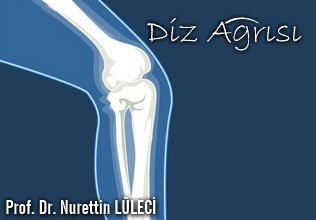
There are many causes of knee pain. With the advancement of our age, this joint, which carries the burden of our body, has some wear and tear and inevitable processes that affect our quality of life, which we call calcification in the future.
In a case of knee pain, in addition to pain, noise from the knee, especially when climbing stairs or going downhill, as if the knee is emptying, swelling of the knee or locking of the knee are among the events we frequently encounter. These complaints should be handled and evaluated separately. These complaints may occur separately or in the same knee of the same patient.
Most people have suffered from knee pain at some point in their lives. One of the most common causes is osteoarthritis (arthrosis-calcification- in the knee). It is more common in older people. One of the causes of knee pain is excess weight, which causes repetitive strains on the knee joint, resulting in pain and stress. This process, which takes years, causes wear and tear in the knee joint. When we have pain in our knee clinically, we prefer not to put a load on that knee but to restrict its movements in order to avoid pain. Processes that lead to a vicious circle begin, such as immobilization of the joint, avoidance of pressing on the knee, shortening of stature due to not using the muscles around the joint, and the emergence of pain due to this. The drugs we take to treat pain may no longer help. In other words, pain becomes chronic rather than a symptom of the problem in the knee, and treatments other than drugs are needed.
Diagnosis of knee osteoarthritis; determined radiologically and by examination. The onset of calcification, the erosion of the joint surfaces, the onset of some problems under the kneecap, the softening of the cartilage in the joint, the beginning of melting, the development of bone deformations are always advanced stage findings. When the problem reaches advanced dimensions, the pain that occurs only when standing up becomes unbearable even at rest. So, when we sit or lie down, our knees start to hurt. It can cause enough deformation to even require knee replacement.
Arthrotic changes in the knee are considered in 4 stages, starting from the mildest radiologically. If you have reached the stage we call Grade 4, your doctor can now recommend you a prosthesis. Some new technology products improve the quality of life. They greatly delay the need for knee replacement.
Symptoms of Knee Calcification
Pain: It can be in the form of aching, blunt or throbbing. Pain characteristically occurs when climbing or descending stairs and bending the knee. Knee friction sound: It is the friction sound felt only by the patient. Feeling of discharge in the knee: Patellofemo This finding, which is caused by the weakness of the large muscle above the knee, occurs during bending-opening the knee under load (climbing stairs, going downhill). Deadlock: A temporary condition that can occur when the string is loaded. Swelling: It is a temporary condition that is not very common on examination.
Treatment
The initial approach should be conservative. Nonsteroidal anti-inflammatory (NSAID) therapy helps reduce pain. Ice application is beneficial. Pain can be reduced by wearing a string bracelet and bandaging. If pain does not decrease with these measures, patients may benefit from FTR.
We follow a path like this in “Remitting Knee Pain” due to chronic calcifications.
a-Patient’s pain
-It is only caused by pressing on the knee and if other treatment methods do not benefit
-We give OZONE into the knee joint for 3-5 sessions. It has exceptional physiological and beneficial effects on knee pain up to grade III.
-In addition, by giving Ozone gas around the joints, especially to the upper muscles, patients get rid of their pain.
-We provide stretching exercises and some advice in the pain-free period.
b- If the patient
– has pain while sitting and lying down
– if he has had prosthesis surgery and the pain has not disappeared
– the patient has knee pain If a prosthesis is needed but the patient does not want to have surgery
– if he is unable to be operated due to other age-related problems
Then the pulse radiofrequency method to the sensory nerve of the knee, which carries most of the pain perception, is a pulse radiofrequency method
. ) We apply. In some persistent cases, intraarticular radiofrequency application has benefits in terms of pain relief.
Radiofrequency application is a painless procedure. It takes 8 minutes. It does not harm the nerves or inside the joint. It only prevents the patient from feeling pain by disrupting the nerve conduction. If the patient wants to see FTR, he can do the exercises painlessly and contribute to the strengthening of the knee.
Ozone: It is active oxygen, has anti-inflammatory effects. It removes the substances that cause pain in the intra-articular fluid from the environment. By correcting the microcirculation, it stops the blood supply of the joint and the progression of destructive processes. Relieves neuropathic pain. It makes the joint painless. Patients who find it difficult to bend their knees are relieved.
Pain is not your destiny. I wanted to share these new and effective approaches with you.
I wish you pain-free and healthy days.
