Facet syndrome is the most common cause of low back pain, especially after the age of 50. Despite this, facet syndrome is a disease that is not sufficiently recognized, neglected and not emphasized by the public on the one hand and by the doctors on the other.
Many low back pain patients who have not been diagnosed correctly, are not understood, and have not been adequately treated go from doctor to doctor due to long-term (chronic) low back pain, take different painkillers, and hope to benefit from endless physical therapy applications that they do not get enough benefit from. . Some patients, who cannot find a cure for their pain, even knock on the door of many non-medical practitioners who claim that they treat low back pain, and they expect to benefit from the useless products they see on the internet or on television. There is a treatment for low back pain, and the quality of life of patients increases significantly with extremely simple procedures.
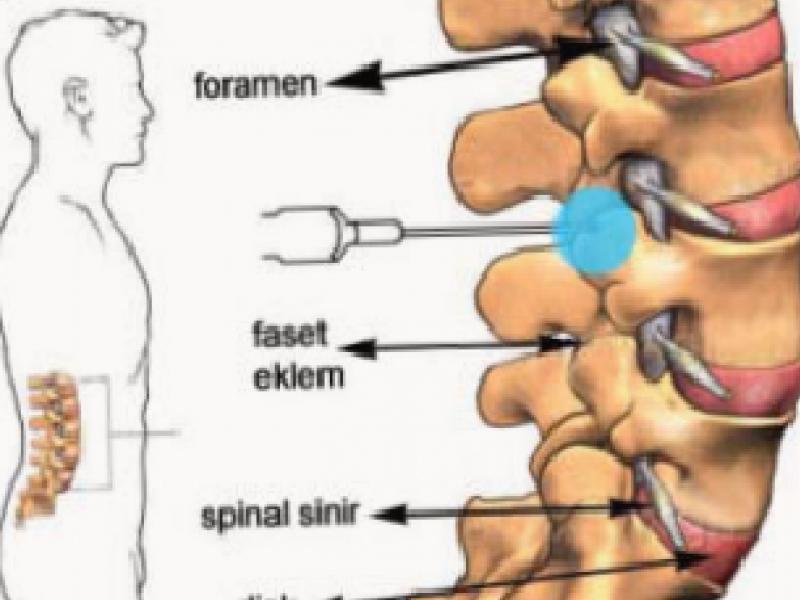
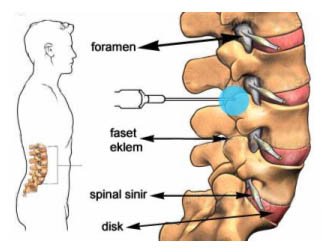
Facet joints are the joints on the back of the spine that connect the vertebrae. The facet joints are located on the posterior surfaces of each vertebra, starting from the neck region to the lowest part of the lumbar region, and play an important role in the movement of the spine.
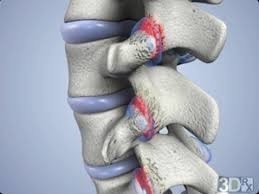
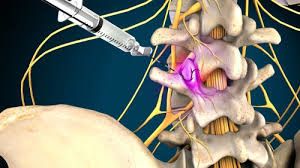
Calcifications that develop in the joints due to aging, the wear and tear of the facet joints due to reasons such as heavy work or sports that regularly force the waist for a long time, blows, severe neck, It can cause back and waist pain.
What are the symptoms of facet syndrome?
Pain due to facet joint wear, unlike herniated disc pain, is seen more in the lumbar region, it can spread to the sides of the waist, hip and upper leg, but it does not go down from the back of the leg to the feet and fingers, as in sciatica pain.
Herniated disc pain increases with leaning forward, while low back pain due to facet syndrome is exacerbated by leaning back and turning to the side. At very advanced levels, facet joint abrasions can reveal the condition of increase in volume and enlargement of the joint, which we call hypertrophy. In these cases, the nerves coming out of the spinal cord may also be under pressure and the pain may create sciatic pain, mimicking the pain of lumbar hernia or neck hernia.
How is facet joint syndrome treated?
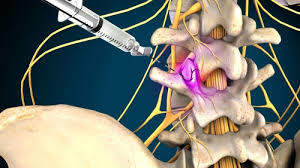
Before treatment of facet joint syndrome, the diagnosis must be made correctly. For this reason, when describing the patient’s complaints, it is necessary to pay attention to what situations and which movements cause pain. The structure of the facet joints should be especially examined in radiological examinations such as MRI and Tomography to the lumbar region. In a patient with a suspected facet syndrome, we apply the procedure we call facet joint blockade in order to diagnose first. This application is the process of temporarily numbing the nerve responsible for the pain sensation of the facet joint with local anesthetic drugs. After this procedure, pain caused by the facet joints will not be felt.
If the patient’s complaints disappear, the chronic low back pain has been found to be responsible, and facet syndrome can be diagnosed. In the second stage, it is necessary to burn the nerves of the facet joints permanently so that the patient does not feel pain. We call this process facet joint denervation. These nerves have no other task other than transmitting the sensation of pain in the joint, burning of the nerves does not cause any other loss of function, only low back pain disappears. These treatment methods are performed under the guidance of the radiological imaging method we call “Fluoroscopy”. General anesthesia is not required for the procedures, intravenous sedatives and local anesthesia are sufficient to make the procedure painless. With the fluoroscopy device, the facet joints and the places where the nerves of the joints pass are visualized. By entering the relevant point with special needles, drug injection or radiofrequency thermocoagulation is applied.
Thermocoagulation with radiofrequency is the process of burning the nerve with the heat effect created by radio waves in a controlled manner. Depending on the number of joints to be treated, the duration of the procedure may vary between 10 and 20 minutes.