
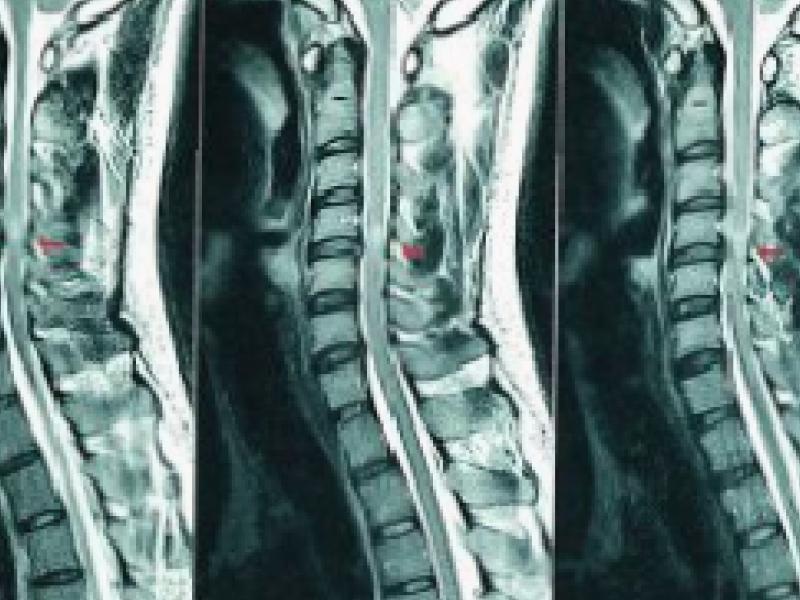
Your spine protects your spinal cord and nerves, allowing you to stand and bend. The cause of wear and tear on the neck vertebrae is narrowing in the spinal canal. Due to the narrowing in the spinal canal, compression and damage may occur in the nerves that go to the spinal cord and arms.

What is Channel Narrowing?
Spinal canal narrowing is often seen in people over 50 years of age. Diseases such as arthritis and scoliosis can worsen spinal stenosis. Patients may have no symptoms or have symptoms that come on gradually or suddenly. These symptoms may include:
• Pain in the neck or back
• Numbness, burning sensation in your arms or legs
• Unbalance when walking
• Weakness in fingers, hands, arms and legs
Diagnosis:
The diagnosis is made by the patient’s complaints, examination and imaging. We use the Modified Japanese Orthopedic Association Scale as an international standard for assessing the severity of spinal cord injury. With the scale, numbness in the arms and legs, weakness and coordination problems, bladder
and bowel problems, fine motor skills of the hands and balance problems are evaluated. MRI is used to evaluate the structure of the spinal cord.
Treatment
After a comprehensive
evaluation of posture, neck mobility, strength and flexibility of patients with cervical narrow canal complaints, they are given one-on-one training with a physiotherapist.
Additional non-surgical treatments include:
Anti-inflammatory drugs and neuropathic pain medications for symptoms of burning, tingling and numbness
Education to restore balance and prevent falls Weight loss guidance, more healthy diet and exercise recommendations to relieve pressure on the spine, pilates and yoga to strengthen the back muscles
Surgical Treatments
If myelopathy is near the cervical stenosis, surgery may be required for treatment. Surgery can prevent further spinal cord damage and it can be healed with physical therapy. We may conduct additional studies as we evaluate for your surgery:
Electromyography (EMG) which can detect muscle weakness due to nerve problems
X-ray films
Computed tomography (CT)
Magnetic resonance imaging (MRI)
For You The most appropriate surgical method will be selected.
Surgery to relieve nerve compression from the front or back of the neck.
Laminectomy is performed from the back of the neck, the compressive part of the vertebra is removed and if necessary
