
Almost every person complains of low back pain at some point in his life. Low back pain is the most common cause that restricts and disables physical functions in employees under the age of 45.
The most common cause of low back pain is soft tissue strain due to misuse of the waist and body, and poor posture. The movements that strain the waist the most; bending forward without bending the knees, lifting heavy, turning the waist, hips or torso while the hips are stable.
What is herniated disc?
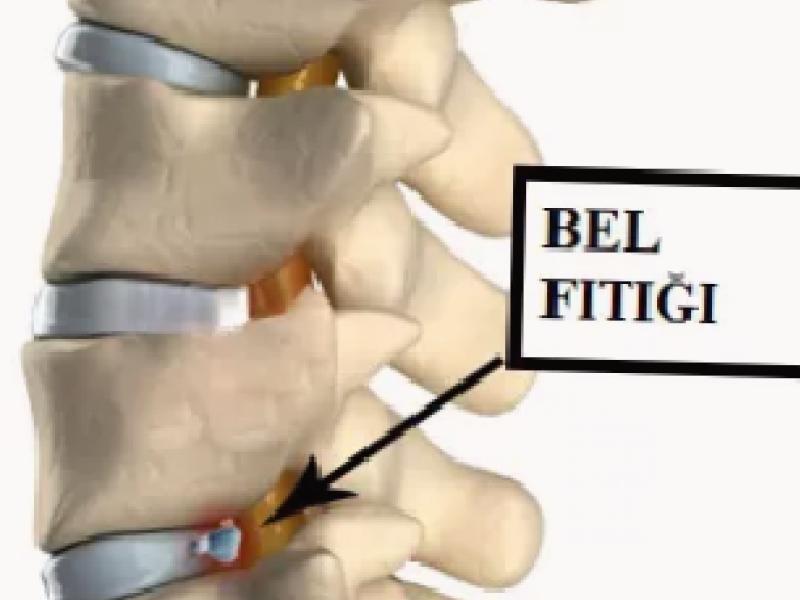
Between the bone structures that make up the spinal column and each of them called vertebrae, flat and round, called disc; There are elastic cushions made of water and cartilage, in gelatinous consistency, reinforced by a membrane. The vertebrae stacked on top of each other in the form of a column and the pillows between them enable us to carry the weight of the body, while at the same time they act as a protective armor for the spinal cord and nerves. As the age progresses, with the decrease in the strength of the bones and waist muscles, the water content and elasticity of these pillows decrease and they can become easily damaged.
Trauma, heavy lifting, excessive strain on the lower back or posture disorders may cause small tears to form by wearing the capsule surrounding these pillows. One day, overloading the waist results in herniation and pressure of the gelatinous material in the middle of these already weakened pillows towards the spinal cord and nerves. This table is called ‘lumbar hernia’.

Herniated disc Symptoms
• Sometimes only low back pain
• Spasm in the waist muscles
• Unilateral or bilateral pain and/or sensory defect
• Loss of strength in different muscle groups in the legs
• Urine and/or stool incontinence, sexual disorders
• Loss of leg muscles in advanced cases, thinning
Characteristics of Leg Pain in Lumbar Hernia
• Leg pain in lumbar hernia is usually unilateral.
• It starts suddenly or increases gradually.
• The pain is persistent or may decrease in intensity from time to time.
• Pain may increase with coughing, sneezing, and prolonged standing.
• Pain can be reduced by walking or in different positions given to the waist.

Diagnosis of Lumbar Hernia
Generally, the diagnosis can be made with the patient’s history, gait, onset of pain, course and a careful examination. However, laboratory tests, x-ray, tomography and/or Magnetic Resonance (MR) examinations should be performed in order to make a definitive diagnosis and distinguish it from other diseases.
The main goals in the treatment of herniated disc are as follows:
• To correct the low back, leg pains, numbness and weakness by treating
• The patient; to enable them to do their work and other physical activities
• To prevent recurrence of the disease and further damage to the lower back
The initial severe pain subsides over time and 50% of the patients recover within the first month. Most of them recover within 6 months. Only 10% of patients have serious symptoms and examination findings that require surgical intervention.
When Is Surgery Necessary?
Only 5-10% of patients with herniated disc may require surgery.
Purpose of surgical treatment; It is to prevent the loss of function and/or to restore the lost function by eliminating the pressure effect of the herniated disc on the nerve elements.
• If you have persistent leg pain (Sciatic pain) that lasts longer than 4 weeks and does not improve with medication and rest,
• If there is weakness and numbness in the leg on examination,
• Urine and if there is inability to make bowel movements or incontinence (Especially this situation requires urgent surgical intervention. If the patient is not operated within hours, permanent damage may occur. If these patients are operated within the first 48 hours, 100% of them recover, while 65% of the patients admitted after 48 hours. may not heal and permanent damage may occur.)
• If a herniated disc pressing on the nerve and/or spinal cord is detected in Magnetic Resonance (MR) imaging, surgical treatment is required.
What are the Surgical Treatment Methods?
Microsurgical Discectomy: It is one of the most popular methods today; It is a surgical technique performed with microsurgery instruments by imaging the nerve tissues larger than the normal eye can see with the help of a microscope. Its main advantages are; The surgery can be performed with a small skin incision, under three-dimensional imaging, with minimal damage to the nerve and surrounding tissues.

Microendoscopic discectomy; It is a surgical technique performed with microsurgical instruments, which are inserted through tubes placed between the waist muscles with a very small skin incision, accompanied by a video-camera. The main disadvantages are; It is the possibility that sometimes not all of the hernia part can be removed or the pressure on the nerve elements cannot be removed when the operation is performed under a two-dimensional image and in a small area. It has no advantage over microsurgical discectomy. It even has disadvantages.
Classical Laminectomy-Macrodiscectomy Operations: It is a classical surgical method that was started to be applied in lumbar hernia surgery in the 1930s and is almost abandoned today. It is done without the use of a microscope. Today, it is not applied in modern neurosurgery clinics because of the larger skin incision, the possibility of damaging the nerves and surrounding tissues, and the long recovery and rehabilitation period.
How is Surgery Performed?
The technique we call microsurgical discectomy is the most popular surgical method today. This operation can be performed under general anesthesia or, if necessary, under spinal or epidural anesthesia without putting the patient to sleep. A small skin incision is made in the region of the hernia. In order to reach the hernia, a very small amount of bone is taken and the operation area is enlarged 25-40 times with the help of a microscope, and the hernia is removed without damaging the nerve tissues and the operation is terminated. Patients are walked by standing up after 4-6 hours; discharged on the same day or the next day.

What are the Risks of Lumbar Hernia Surgery?
Microsurgical discectomy, which was briefly mentioned above, is the most preferred method today and is generally well tolerated by patients. Patient satisfaction is over 90%. However, nerve tissue may be damaged, albeit slightly, during the operation, there is a possibility of recurrence, infection and excessive scar tissue may develop in the operation area, which may require a second operation.
What are the Results of the Surgery?
The success rate is 90-95% if patients who have a hernia complaint and need surgery are operated at the right time and with appropriate surgical methods. However, the success rate of the treatment is lower in patients who do not have surgery despite the need for surgery and who apply with more severe complaints 3-6 months later. In this group of patients, sensation defects and strength losses in the leg may not be fully recovered after surgery. In addition, patients with late surgery are more likely to be unable to return to work.
What Should Be Done to Prevent Lumbar Hernia?
• Use your waist correctly in daily life and work environment.
• Pay attention to your posture while standing and sitting.
• Lift and transport heavy items correctly.
• Reach forward, turn right, bend forward while leaning forward.
• Choose your bed well, sleep in the right sleeping position. Lie down on the bed and get up.
• Exercise regularly.
• Keep in good condition.
• Avoid risk factors as much as possible.
