

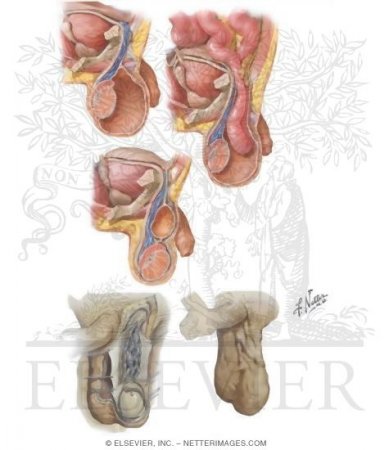
Inguinal hernia is a problem that is more common in boys than girls, occurs due to the congenital incision of the peritoneum into the inguinal canal, and needs to be treated surgically. When boys are in the womb, the testicles are just below the kidneys in the baby’s womb. At the 28th week of pregnancy, the testicles pass through the inguinal canal and descend towards the bags. At this time, the peritoneum also moves down the inguinal canal. After the testicles come to their normal position, this opening is closed by sticking the peritoneum. If this opening is not closed, inguinal hernia or water hernia (hydrocele) occurs depending on the width of the opening. Inguinal hernia can be seen at any age, starting from birth. It is more common in premature babies. Its incidence is 60-70% on the right side, 15-20% on the left side, and around 10% on both sides.
The main finding of inguinal hernia is swelling in the groin. This swelling is usually in the groin. This swelling, which is often only in the groin area in girls, can extend to the bag in boys. Swelling becomes more apparent when the baby or child is more active. However, it can disappear when he sleeps and stays calm, so the history given by the family during the examination and the statements of the caregiver are as important as the examination.
Pain in inguinal hernia occurs with swelling. Since the pain triggers more crying, this comes across the family as a vicious circle. In babies with swelling in the groin who cry constantly, if the child is exhausted, tired and sleeps and the hernia does not return, hernia suffocation occurs. Therefore, the younger the baby, the higher the chance of strangulation of the hernia. Here the swelling in the groin begins to bruise and the baby begins to vomit. If the intestines are choked in the inguinal canal, signs of intestinal obstruction occur. This is because most often the intestines enter the hernia. Ovarian stenosis is most common in girls. In these cases, treatment should be applied immediately and the organs should be protected.
Inguinal hernia is a disease that needs to be operated when diagnosed, as there is no chance of spontaneous recovery, regardless of the baby’s age. Being young is not a problem for treatment.
A tiny incision made from the groin, hernia sac is found and removed. Laparoscopic treatment is not recommended in early childhood.
This type of operations must be performed by a pediatric surgeon in hospitals where there is an anesthesiologist and pediatrician. All kinds of surgical intervention in children should be performed under anesthesia. The charlatans who claim to perform such surgical interventions only for commercial reasons and without anesthesia should not be believed. Hernia operation, like other inguinal canal diseases, is included in the group of day surgery diseases. In other words, after the intervention, the child is sent home, except for special cases.
