
There are 31 vertebrae on our back that start from the neck region and extend below our hips and form the spinal canal. When five of these vertebrae herniate, problems are found in the lumbar region. Between these vertebral bones, there is a special connective tissue in the form of a disc, which facilitates movement, ensures the durability of the spine, and acts as a protector against impacts.
This disc consists of two parts, an inner and an outer layer. When the structure of the outer layer deteriorates, the soft layer inside protrudes outward. This protruding (herniated) part presses on the nerves in the spinal canal and compresses these nerves. Sometimes, chemicals are secreted from this herniated area and pain is felt. The disease that occurs in this way is called herniated disc.
Who gets herniated disc?
More than 80 percent of the population suffers from low back pain at least once in their lifetime. For this reason, the number of applicants to the doctor is quite high. It is most common in middle age, but can occur at any age. People who work sitting down and do this on the wrong chair are more likely to have a herniated disc. Those who have to lift heavy loads, those who act carelessly while doing sports, those who start the exercise without warming up, and those with posture and sitting disorders are at risk.
Smoking and alcohol use, which are considered risk factors for almost every disease, can also trigger herniated disc. Those who have a stressful and restless life are also likely to suffer from a herniated disc. The more you are exposed to these risks, the more likely you are to have a herniated disc.
In addition to these factors, hereditary (family) factors should not be forgotten. Those with a hernia in the family are at risk.
Causes
Unconscious and irregular movements and lifting heavy loads play an important role in the formation of lumbar hernia. Even when a very light load is lifted, a herniated disc can occur. For example; When we lift something by bending, this load is not evenly distributed to every part of our back. Irregularly distributed load also causes herniated disc.
Another reason is the deterioration of the feeding of these discs. As we age, the vessels feeding these discs and the amount of water in the disc decrease. The disc, whose amount of water decreases and cannot get enough nutrients, becomes smaller. Therefore, the distance between the two vertebrae is reduced. Along with these negativities, there is also deterioration caused by physical movements in the disc, whose nutrition is reduced and therefore the amount of oxygen decreases. The number of cells in the disc also decreases.
Due to these effects, after a wrong move by the person, the inner part protrudes out and a herniated disc occurs.
What are the symptoms?
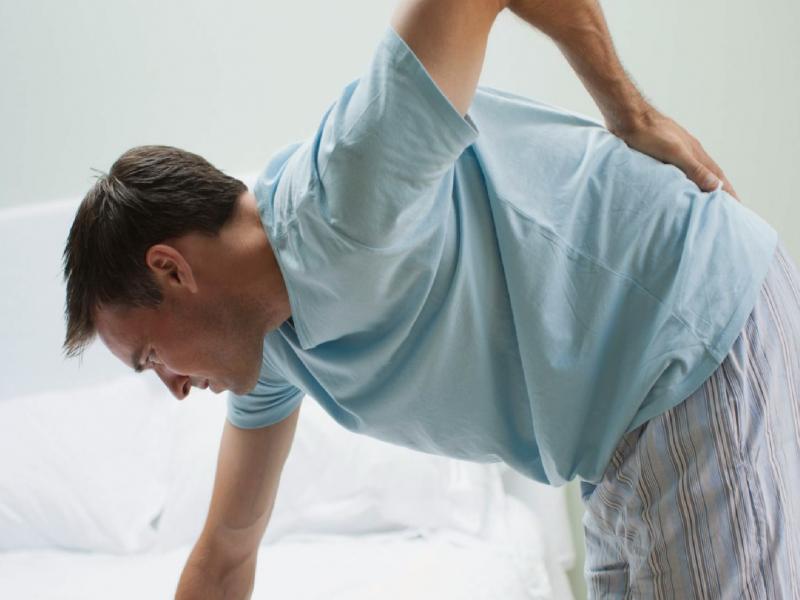
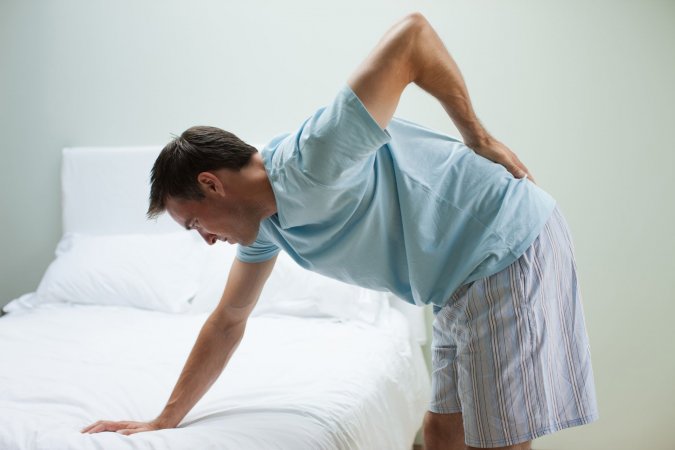
The biggest symptom of lumbar hernia is pain in the lower back and legs. When the patient goes to the doctor, he says that my back hurts my leg. But there may also be only back pain or only leg pain. Numbness and loss of strength may occur in the leg. In addition, difficulty in performing the movements that he has done before, restriction of his mobility and limping while walking can be seen.
In more advanced and severe forms of lumbar hernia, sexual disorders, difficulty in urinating and defecation or incontinence can be seen. Paralysis of the legs may occur or the feeling of the leg may decrease.
Diagnosis
Not every low back pain is a herniated disc. Many problems such as cancer, rheumatism, slipped back, hurting the waist while doing sports give symptoms such as herniated disc. Therefore, it is necessary to be careful when making a diagnosis. MRI has an important place in the diagnosis of herniated disc. With this method, it can be easily determined where and in which tissue the problem is. In addition, computed tomography may be preferred because it reveals the condition of the bone better. These images should be supported by the results of the examinations and clinical tests.
Protection
We appreciate our health only after we lose it. However, the important thing is to take the necessary precautions before catching the disease and to minimize the risk of catching a herniated disc. For this, it is necessary to take care not to lift heavy loads at any time. We should avoid movements that contradict the structure of the body. Instead of bending down using the waist, it is necessary to squat, that is, bend our knees and bend. When buying something from a place, it is necessary to get as close to the object as possible. It is wrong to try this by lying down.
We need to avoid a sedentary lifestyle. Exercises that strengthen the waist muscles (done while healthy) are very beneficial. However, doing these does not mean that we will not have a herniated disc. Genetic factors and personal conditions also play a role in the formation of this disease.
