
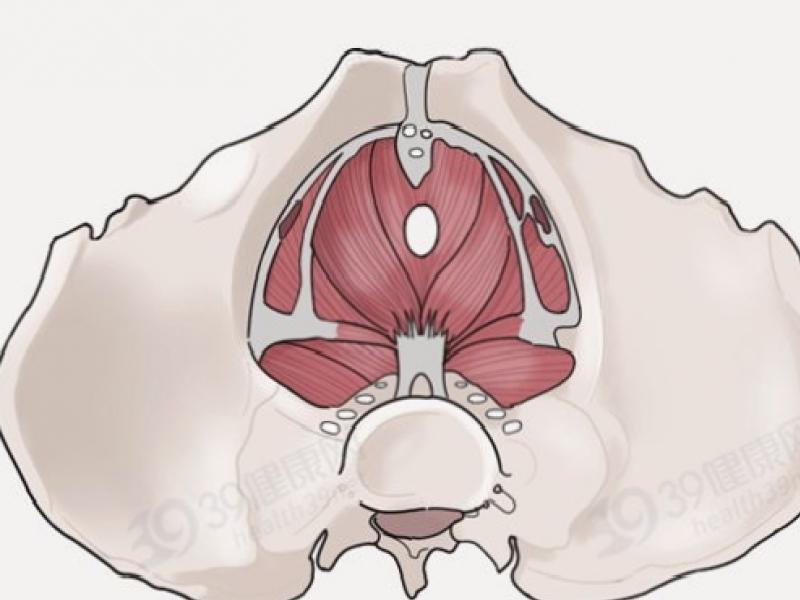
WHAT IS REVERSE KEGEL TRAINING? WHY REVERSE
SHOULD I DO A KEGEL TRAINING?
Reverse Kegel is an eccentric contraction training where you can regain the elongation ability of your pelvic floor muscles, which helps to relax your pelvic floor. With this exercise, it is aimed to increase flexibility as well as relieve pelvic pain and tension.
In order for the skeletal muscles to fully function, the muscles must always be able to contract and relax. It is also valuable for the muscles to maintain their relaxation feature and elongation ability as well as being strong. Reverse Kegel Training is the opposite of standard Kegel Training. Classical Kegel exercises focus on contracting and relaxing the pelvic floor muscles. Reverse Kegel exercises, on the other hand, focus on stretching the pelvic floor muscles, contracting and relaxing them in and out. Both types of contractions can help keep our pelvic floor muscles functioning.
Read on to learn how Reverse Kegel Workouts can benefit men and women, how to find real muscles, how to work them and more.
WHAT ARE THE BENEFITS OF REVERSE KEGEL TRAINING?
Kegel Exercise – Known for its potential effects on some types of urinary incontinence, pelvic organ prolapse, stabilization of your trunk muscles (core area), childbirth and your sex life. Systematic and truth-prescribed workouts can help boost your libido and experience stronger orgasms while helping with pelvic floor issues.
Reverse Kegel Exercises – Especially for women with myofascial pelvic pain, dyspareunia (painful sexual intercourse), endometriosis, vaginismus and chronic pelvic pain, relaxation of the pelvic floor muscles can help relieve possible pain. It can also be helpful during labor, as the workout teaches you how to lengthen and release your pelvic floor muscles. During birth, the uterus contracts and supports the baby’s exit, while the pelvic floor muscles should be relaxed and extendable.
Generally speaking, the Reverse Kegel Training helps to lengthen the pelvic muscles and improve muscle control.
It can help alleviate various problems related to pain, tenderness and loss of function due to tension in the pelvic floor muscles in many problems, including muscle imbalance and constipation.
How to find the right muscles?
Before trying the Reverse Kegel Training, it is valuable to find and identify the true muscles.
For many people, contracting the pelvic floor by stretching it straight down is an example of the share of emptying when urinating or defecating. For this reason, it is important to empty your bladder and intestines before you start training. So you can have a comfortable practice.
When you’re ready, focus on actually extending and releasing these muscles as you breathe out. As you fill your body with breath, your diaphragm and pelvic floor muscles should descend in a coordinated manner.
HOW TO DO REVERSE KEGEL TRAINING?
Although men and women practice differently, orientation is basically one-on-one for both genders. You are stretching the pelvic floor muscle cluster that covers the bottom of the pelvis.
for women
You can do the exercises while lying on your back, sitting or standing with your knees bent. The backstroke is the easiest to start. Being able to stretch these muscles in any situation after progressing in training means that you are the master of the job.
Once you’ve got the position that’s right for you, take deep breaths and bring your awareness to your pelvic floor muscles. As you breathe out, feel your muscles relax and actually extend and open downwards.
You can use a mirror to control the movement of the exercise. Anus and vagina for women and for men your anus stays free as the space in the middle of the penis moves downwards. You should also feel your pelvic floor muscles expanding.
Try to keep the Reverse Kegel Workout long for 5 seconds and then leave it for one-to-one respite. You can do two to three sets of 10 points throughout the day. Once you’ve mastered this, you can try holding and letting go longer. (If you can’t do it for 5 seconds, start from your limit. Consult your pelvic floor physiotherapist for a more specific training prescription.)
Make sure to breathe while doing these exercises. It is valuable to breathe into your belly as you breathe in (rather than just breathing from your chest). Keeping your stomach, hips and inner thighs relaxed is valuable.
IS IT VALUABLE TO MASTER STANDARD KEGEL TRAINING FIRST?
Learning to do the standard Kegel Training first can be helpful for muscle orientation. This can help you find the real muscles and learn how to control them.
ATTENTION WHEN PERFORMING REVERSE KEGEL TRAINING
It will be better to do Reverse Kegel Training when your bladder and bowels are relatively empty.
Do not overdo it and do not push your muscles too hard, especially in the beginning. Make sure you don’t hold your breath, strain, strain, or strain any other part of the body. When performing a random core stabilization workout, you should not mix these workouts.
Remember to breathe properly. Holding your breath can create more tension in your body.
If they cause you any random pain or discomfort, stop doing Reverse Kegel Training. This is often a sign that the training is not done properly. It will be useful to talk to a pelvic floor physiotherapist about how to master the technique.
WHEN WILL I GET RESULTS FROM REVERSE KEGEL TRAINING?
You may not find this exercise easy at first. It becomes more natural and easier with time and practice, as with every new movement we learn.
The time it takes to see results varies from person to person. It may take several weeks or months to see results. Being patient and balanced with your routine is valuable. It may be necessary to add other pelvic floor exercises to your program as well. This article is for informational purposes only. For a special treatment program for you, apply to the relevant health worker.
