Description
Carpal tunnel syndrome presenting with numbness, tingling and other symptoms; It is a disease caused by compression of the median nerve in the wrist. Many factors can cause carpal tunnel syndrome, including the anatomy of your wrist, some underlying health problems, and heavy use of the hand.

Symptoms
Carpal tunnel syndrome usually begins with progressive numbness, tingling in the thumb-middle fingers and palm.
Symptoms of carpal tunnel syndrome include:
Tingling or numbness. Tingling and numbness may be encountered, especially in the fingers other than the little finger, the palm and the wrist. These symptoms, which occur more often during sleep, by holding the steering wheel, phone or newspaper, can spread upwards from the wrist. Patients feel the need to “shake” their hands to relieve symptoms. As the disease progresses, the numbness may become permanent.
Weakness. Patients may feel weakness in their hands and may drop held objects.
When to see a doctor
If you have the above symptoms and these symptoms affect your daily life and sleep patterns, it is necessary to consult a doctor. If the condition is left untreated, permanent nerve and muscle damage can occur.
Causes
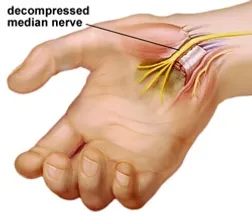
Carpal tunnel syndrome occurs as a result of compression of the median nerve. The median nerve passes through a passage in the wrist (carpal tunnel) and reaches the inside of the hand. This nerve provides sensation to the palm and fingers, except for the little finger.
Risk Factors
Anatomical factors. Wrist fractures or dislocations can change the size of the carpal tunnel, resulting in compression of the median nerve.
Gender. Carpal tunnel syndrome is more common in women.
Conditions that injure the median nerve. Some chronic diseases: diabetes can increase the sensitivity of the nerve and lead to faster damage.
Inflammation. In cases of increased inflammation such as rheumatoid arthritis,
Changes in body fluid balance. In cases of fluid accumulation in the body (pregnancy, menopause, etc.)
Other medical conditions. Occupational factors such as menopause, obesity, thyroid disease, kidney failure
. Those who work with vibrating devices, those who spend a long time at the desk in front of the computer, in business lines where the wrist must be bent for a long time, such as dentists.

Diagnosis and tests
For the diagnosis of carpal tunnel syndrome, your doctor may order one or more of the following tests:
History. Your doctor will question the signs of your disease.
Physical examination. Your doctor will examine you. He or she will assess the feel of your hand and the strength of your muscles.
X-ray. Some doctors may order a direct X-ray of the affected wrist to evaluate for arthritis or a fracture.
Electromyography. Electromyography measures the fine electrical discharges produced in the muscle. During this test, your doctor may insert very fine needle electrodes into the muscles. In the test, the electrical currents produced by the muscles at rest and during contraction are evaluated.
Nerve conduction study. As a variation of electromyography, 2 electrodes are attached to your skin. An electric current is given to the median nerve at the upper level of the wrist and it is evaluated whether this current slows down at the lower level of the wrist.
When your doctor encounters such a situation, he or she should tell you to apply to a “Brain and Nerve Surgery Specialist”.
TREATMENT
Carpal tunnel syndrome is a disease that should be treated as early as possible after the symptoms appear. Patients with mild symptoms of carpal tunnel syndrome can reduce symptoms by taking more frequent and longer breaks to rest their hands, avoiding activities that aggravate symptoms, and applying cold to reduce swelling. If these methods do not lead to a decrease in symptoms in 1-2 weeks, methods such as using wristbands, drugs and surgical treatment should be applied. Wristbands and other medical treatments are beneficial in patients with mild to moderate symptoms less than 10 months old.

Surgical treatment
If the symptoms of carpal tunnel syndrome are severe and there is no benefit from non-surgical treatments, surgical treatment is the appropriate option. The aim is to reduce the pressure on the median nerve. This is accomplished by cutting the ligament pressing on the nerve.