
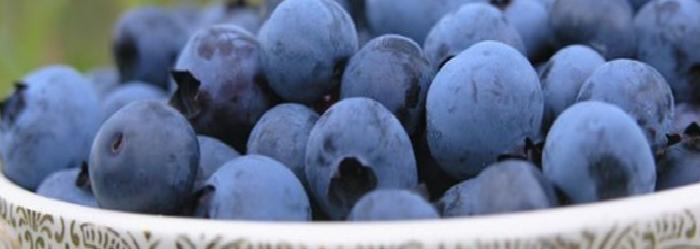
Blueberry (likapa) is a fruit that has increased in popularity in weight loss diets recently and is frequently used
. So, is it as useful as it seems? How many calories? How is the distribution of nutrients
? Are there any health risks, and if so, what are they? To answer these questions, let’s take a closer look at the blueberry
.
Blueberry is a fruit that has adapted to temperate climatic conditions and is in botanically real
grapes cluster. Blue berry, which started to be grown in the USA in the early 1900s, has a wide range of use in consumption and in the food industry. Cultivated wild
myrtles originate from northern and southern origins in the form of high-height bush (Vaccinium
corymbosum L.), rabbit-eye blueberry (Vaccinium ashei Rehd.) and low-rise bush form
. )
are varieties that fall under the blueberry (Vaccinium angustifolium) cultivars. In our country, especially the Black Sea Region
(Artvin, Rize, Trabzon, Ordu, Giresun, Gümüşhane, Samsun, Sinop, Kastamonu,
Zonguldak, Bolu, Bartın and Düzce), Marmara Region (Kocaeli) Its wild forms (V. vitisidea, V.
myrtillus, V. uliginosum and V. . arctostaphyllos) is grown, studies for the adaptation and dissemination of blueberry
cultivation are also continuing. Blueberry is known with names such as
likapa, blueberry, ligarba, bearberry, morsivite, bush strawberry, Trabzon tea in our country.
The components in blueberries help prevent age-related memory and motor skill loss, oxidative damage
and inflammation. In a study published by the Jean Mayer Center for Human Nutrition Research
at Tufts University, rats were fed blueberry extract
for 10 years. they showed high performance. Apart from that, blueberry shows antioxidant properties due to the phenolic compounds
it contains and is protective against cancer. At the same time, the vitamins (C
and E) and carotenoids it contains stand out as effective compounds
in the prevention of diseases related to oxidative stress.
Blueberry shows a protective effect against hypertension
thanks to the anthocyanin pigment it contains. In a study lasting 14 years, in which 134.000 women and 23,000 men participated, it was determined that those who consumed more than 1 tea
glass (125 ml) of blueberry per week compared to those who did not consume it
, the risk of hypertension formation decreased by 10%. It also reduces the risk of colon and ovarian cancer
. In a study, it was determined that a compound called pterostilbene found in blueberries provides protection against colon
cancer. Due to its inflammatory (anti-inflammatory) feature
, it has the ability to suppress tumor growth in the colon. In another study
conducted on women, it was determined that high intake of blueberry flavonoids reduced the risk of ovarian cancer
by 34%.
It protects heart health
with its high fiber, antioxidant capacity and reducing macular cholesterol. In a study conducted on 93,000 women in 2012, women who consumed 3 or more servings
blueberries and strawberries per week had a 32% lower risk of heart attack compared to those who consumed these fruits once a month or less
. was detected.
Extract is used in the treatment of a number of eye diseases: Studies have revealed that combined blueberry extract with 20 mg of ß-carotene
is effective in relieving the eye’s day and night adaptation distress
.
Blueberries contain many
polyphenols, salicylic acid, carotenes, fiber, folic acid, vitamin C, vitamin B
, potassium, manganese, magnesium, iron, riboflavin, niacin, phytoestrogens. )
contains antioxidant compounds and despite such beneficial properties, it is also quite low in calories. 1 tea
cup (100gr) of fresh blueberries is about 45 calories. Blueberry contains 83% Water, 15% Carbohydrate,
1.5 Fiber, 0.7% Protein, 0.5% Fat. Nutritional content of 100 g of blueberries; 89mg. Potassium, 10
mg. Phosphorus, 6mg. Calcium, 5mg. Magnesium, 0.6mg. Selenium, 0.28mg. Manganese, 0.17mg.
Iron, 0.11 mg. Zinc, 13 mg. Contains Vitamin C. When we look at dried blueberries, the calorie
content increases. When we calculate calories in exact measurements, that is, over 100gr, we encounter a value of approximately 300
calories. We should be careful when consuming dried blueberries, and we should not exceed 2 tablespoons
.
The findings of the research at the University of Michigan are that Blueberry prevents metabolic syndrome and cardiovascular diseases
by preventing the fat around the waist
. Here, the balancing of the insulin level of blueberries makes it stand out as an alternative food, especially for those who have a sweet crisis problem
. A complete meltdown of body fat was observed in rats fed a 90-days light
diet loaded with Blueberry.
Are there blueberries wasted?
Blueberry still has no known side effects. The leaves and fruit of the plant can be used with faith
. But the element obtained from its leaves contains tannin. Therefore, if consumed in many forms
, it can cause a lot of weight loss, heart spasm or fatal consequences. In addition, if there are drugs that are used regularly
, blueberries can reduce their effect. The fact that the plant, which has the effect of preventing blood clotting
, causes heavy bleeding in women during menstrual periods
may be the issue. It can cause a lot of blood loss
as it prevents blood clotting during an accidental injury. For this reason, it is recommended not to consume foods and beverages containing blueberry
, especially before or after a surgical intervention. It should not be forgotten that people who use blood thinning drugs may experience the negative effects of the drug
if they consume the works prepared with blueberry
.
As a result, besides the effects of helping to burn fat, blueberry shows a protective effect against many diseases
. Because of these effects, it would be beneficial to give more place
in our healthy nutrition system.
References
1. Austin, ME, 1994. Rabbiteye Blueberries. Development, Production and Marketing.
Agscience Inc., Florida, USA, 160 pp
2. Steel, H. 2006a. Blueberries (likapa). http://www.uzumsu.com/dosyalar/likapa-sistmtk-
botany-kult.pdf- (Access date: 18.08.2011).
3. Davis, PH 1978. Flora of Turkey and East Aegean Islands. Edinburgh University Press. 6:89-108.
4. Characterization of Phenolic Compounds of Blueberry Fruit Grown in Turkey, Nutrition and
Feed Science – Technology Journal / Journal of Food and Feed Science – Technology 15: 9-18
(2015)
