
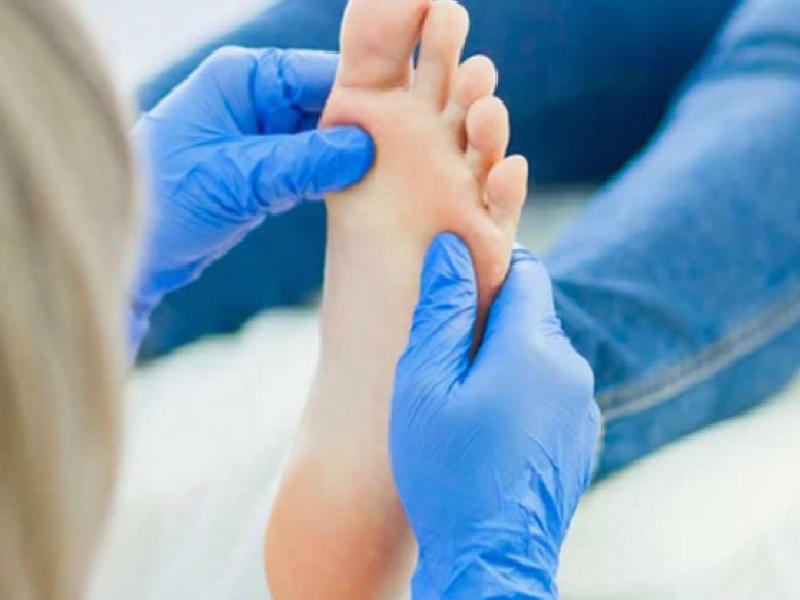

Diabetes disease, which is in the middle of today’s diseases, is the presence of small wounds on the feet in the middle of the symptoms. Especially diabetic patients need to give a lot of importance to foot care. In many diseases, there are important points that people should pay attention to. Diabetes patients also need to pay attention to foot care, otherwise the wounds on the feet may leave their place to important questions. About diabetes and its symptoms, Fırat University Medical Faculty Hospital, Department of Infectious Diseases and Clinical Microbiology Dr. Instructor Member Şafak Özer Balın shared information about diabetic foot wound.
Attention to Foot Wounds in Diabetes!
Diabetes, which has a global incidence of 9 percent according to the data of the International Diabetes Federation, is a valuable public health problem that causes death at an early age and negatively affects the quality of life if not kept under control. is predicted to happen. Foot wounds seen in diabetic patients have important consequences for both the patient and the health care system.
Diabetes, a chronic metabolic disease characterized by hyperglycemia, which always requires medical care, in which the organism cannot benefit adequately from carbohydrates, fats and proteins due to insulin deficiency or defects in insulin action, is considered one of the most valuable health problems in today’s world. Diabetic foot wounds can cause important consequences for both the patient and the health care system.
Foot Wounds Are Growing!
While the risk of diabetic foot ulcer is one out of every six patients with diabetes in developed countries, this rate is much higher in developing countries. These wounds may be due to border damage, paralysis, or ischemic origin, that is, due to a regional decrease in blood flow or cut-off, where a part of the body cannot receive adequate blood and oxygen.
In addition, hyperglycemia, that is, the increase in blood sugar in the body, increases the tendency to infection in various ways. Superficial wounds resulting from ischemia, uncontrolled hyperglycemia and repetitive traumas progress to osteomyelitis, which we call deep-seated abscess and osteomyelitis, in a short time. In the midst of conditions that increase the susceptibility to ulcers in areas such as feet and legs in diabetic patients, disorders in the immune system, damage at the border ends, circulatory failure (blood vessels), presence of major or minor traumas, duration of diabetes, impaired glucose control, increased pressure in the foot, development of Charcot joint deformity Factors such as smoking, smoking or the patient’s being overweight can be counted.
You May Not Be Aware of Foot Wounds!
Peripheral neuropathy seen in diabetic patients is often in the form of sensorimotor neuropathy. It is symmetrical, chronic and distal, more evident in the lower leg; shows retention in stockings. In addition, since it changes the biomechanics of walking, it causes the skin on the sole of the foot to thicken, and all the pressure on the sole of the foot becomes heavy at one point.
The absence of pain sensation in these patients prevents natural protection, that is, not stepping on the lesion. This can lead to wound development. In addition, minor trauma, such as unsuitable shoes, burns, cuts, insect bites, may simply develop chronic wounds in these patients. Loss of pain sensation delays the diagnosis by causing the patient to consult the doctor late.
Foot Wound Helps Control Diabetes!
Diabetic foot wound can be prevented more than once by providing foot care and controlling diabetes of the patient. Significant complications or loss of limbs can be prevented by early detecting and beautifying a wound that has occurred more than once, or by taking an early and appropriate antibacterial treatment approach in the presence of an infection.
A multidisciplinary approach is required to make appropriate diagnosis, active treatment and follow-up of diabetic foot wounds and infections and to prevent unnecessary amputations. Patients with diabetic foot wounds should first apply to an infectious diseases specialist and an endocrinology specialist, and if necessary, they should be evaluated by consulting a surgical branch (plastic surgery, orthopedics), vascular surgery and dermatology specialists related to diabetic foot surgery.
Do Not Disrupt Treatment!
The general treatment approach in the treatment of diabetic foot infection in order to provide wound healing and save the leg includes removal of dead and infected tissues with urgent and aggressive debridement, early initiation of appropriate antibiotic therapy and metabolic control. The goal of treatment is to prevent progressive tissue damage by stopping the infection. Antibiotic therapy is necessary for all infected wounds. Although antibiotic therapy is necessary for all infected wounds, it should be combined with appropriate wound care. Treatment should be started as soon as possible after the clinical diagnosis has been made.
Thus, the rate of infection-related morbidity, length of hospital stay, and large toe amputations are reduced. The duration of treatment is 7-10 days in mild infections, 2-3 weeks in moderate infections, and in the middle of 2-4 weeks in severe infections, not until the wound is completely healed. In acute osteoarthritis, the treatment period should be 4-6 weeks, at least two weeks of which should be intravenously, and in chronic osteoarthritis, if the infected bone tissue cannot be removed, a treatment period of at least three months should be considered.
Take Care of Daily Foot Care!
Early wound care and, if necessary, antibacterial treatment can prevent the progression of the wound and the resulting amputation of the foot. The risk of death is high in the patient who underwent amputation due to diabetes, and the 5-year mortality rate was determined as 70 percent. In order to prevent diabetic foot infection, a good glycemic control is required first. Education of high-risk individuals and families, relief of the foot from the load and pressure, evaluation of the vascular structure of the foot and local wound compliance should be provided.
The foot care of these patients should definitely be done daily by washing the feet, drying the middle of the fingers and applying moisturizing cream, not walking barefoot, using appropriate shoes and socks, nails trimming properly and rough nails should always be checked. In addition to these, callus treatment should be done carefully; the inside of the shoes should be examined daily, the socks should be changed daily, and in cases such as athlete’s foot, cuts, scrapes, and wounds, it is necessary to apply to the health institution without wasting time.
