
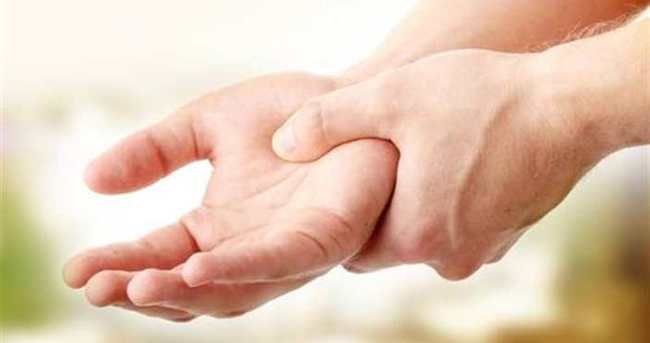
In normal conditions, all movements of arms, legs, hands and feet occur perfectly and do not cause any complaints, thanks to the fact that sense and movement feature work together in harmony; however, in some cases, the nerves going to the hand and foot muscles are compressed as they pass through thin channels and nerve compression may occur.
The most common nerve entrapment is known as “Carpal Tunnel Syndrome” and it affects the fingers and wrists.
This discomfort, which is caused by the compression of the median nerve leading to the first four fingers of the hand at the wrist level, is common in people who use their hands a lot (computer users, desk workers) and housewives.
Nerve compression can also be seen frequently in diabetic and thyroid patients.
Nerve compression in the elbow (cubital tunnel syndrome) mostly targets people who work at a desk.
What are the Symptoms of Nerve Compression?
The most important symptom is hand numbness that wakes you up at night. Sometimes there may be pain, but numbness is usually in the foreground; patients state that they feel relieved when they shake their hands. These complaints recur during the day, and the strength of the fingers decreases over time, and the items held in the hand begin to fall.
A similar situation develops in the ankles and toes, especially in those who wear pointed toes, high-heeled shoes, and those who work in heavy jobs, and it is called “Tarsal Tunnel Syndrome”. Similar complaints occur in the ankle and toes.
In both nerve compression disorders, a definitive diagnosis should be made first. After the first examination, nerve conduction should be measured with a sensitive system called EMG. As a result of this examination, physical therapy methods are applied together with medical treatments in cases that are not very advanced and have not developed any loss of strength yet. A suitable splint is given to rest the hand, and in some cases injection therapy can be applied. Physical therapy is used to relax the nerve in the pinched area and accelerate its recovery.
In advanced and severe cases, surgical methods are used. With the surgery performed on the hand or ankle, the passage of the nerve is relieved. The surgery can be performed with local anesthesia or under general anesthesia. Since the operation is performed with microsurgery methods, no damage to the nerves occurs.
After the operation, a rehabilitation program is applied at home to relieve joint stiffness and strengthen the muscles. Then, in order to prevent the same ailment from recurring, occupational factors are tried to be corrected, training and exercises are made to correct errors related to the use of hands and feet.
