
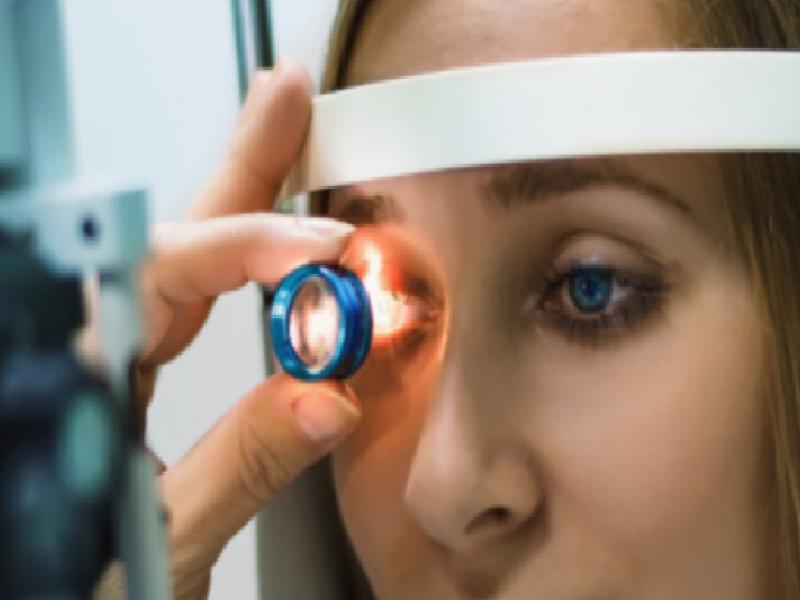
Our eyes, which we can describe as the window that connects people to the world, are our most important sense organ among our five sense organs, to which we owe 80 percent of our ability to learn and perceive. Our eyes, one of our most sensitive organs, also have a very complex structure. In case of eye problems, it is necessary to take action without wasting time. Ophthalmology and Retinal Surgery Specialist Prof. Dr. Nur Acar Göçgil warned about the symptoms of the disease and the treatment process.
“IF NOT TREATED, IT RESULTS WITH PERMANENT VISION LOSSES”
Stating that retinal detachment is a serious eye disease, Prof. Dr. Nur Acar Göçgil said, “The retina, which is a translucent layer, is connected to our brain by a very thin nerve. Through this connection we perform the act of seeing. Retinal detachment, which is a serious eye disease, appears as the separation of the intact retinal layer from the inner surface of the eyeball to which it is attached. The most common cause of retinal detachment is retinal tears. If the retinal tear is not treated immediately, the retina begins to detach and spread to the entire retina. Our vision also starts to deteriorate in one area and decreases to the level of light vision within hours and days. If time is lost in the treatment process, this disease results in permanent vision loss. Therefore, people who are in the risk group by understanding the symptoms well should have their eyes checked routinely. Likewise, in those with systemic diseases such as diabetes or high blood pressure, the blood flow will also affect the retina, so these health problems should be kept in order. made the statement.
CAUSES OF RETINAL DETACHMENT
Commenting on the causes of the disease, Prof. Dr. Göçgil said, “Conditions such as high myopia and related thin degenerations at the ends of the retina, traumas to the eye and its surroundings, eye surgery, cataract surgery, changes in the density of the gel-like liquid layer in the eye with advancing age, and retinal rupture in the family. In general, we can count it among the causes of retinal detachment. Retinal detachment is common after cataract surgery, with a rate of 1%. In general, if a retinal detachment has been experienced in one of our eyes, the same problem may occur in our other eye with a probability of 10%. Apart from these situations, a tear may develop in the retina and there may not be a situation that can be done to prevent it. Therefore, early diagnosis is always very important.” he said.
IF YOU EXPERIENCE THESE SYMPTOMS, DON’T WASTE TIME
Stating that it is necessary to be careful about symptoms such as flashes of light in the eyes, suddenly developing flying objects, seeing black spots, seeing with gray or black curtains in the visual field, seeing larger or smaller shapes than they are, straight lines broken, crooked vision, Prof. Dr. Göçgil said, “After the first findings of the disease, deterioration in the visual field occurs in the affected part. Our vision begins to blur, and in some cases, we begin to perceive a moving gray curtain during our vision. Early diagnosis and treatment are of great importance in the treatment of retinal detachment. Many factors need to be considered in determining the treatment method. For example, how much the retina is separated from where it should be, the number of retinal tears, the size and location of the tear are some of the factors that affect the surgical method.
ATTENTION TO THOSE WITH MYOPIC REFRACTIONAL DISORDER
Referring to the risky group for retinal tear and detachment, Prof. Dr. Göçgil said, “Myopic people and especially those with high diopters (5-6 and above), those with a family history of retinal tear and detachment, those who have had cataract and some eye surgery, those who have had eye and head trauma, those in the advanced age group, and those with certain systemic diseases are at risk. is located in. Those with myopia need to be even more careful about retinal rupture. Because the eyes of myopic people are longer than normal people, and their layers such as retina and choroid are thinner. In these eyes, thin areas of the retina, also known as degenerations, holes and tears in the retina are more common. Therefore, in the routine eye controls of myopic patients, their pupils should be dilated with medication and their retinas should be checked with great care.” made its assessment.
TREATMENT WITH SURGERY IS POSSIBLE
Stating that it is possible to treat retinal detachment with surgery, Prof. Dr. Nur Acar Göçgil said, “If the tears in the retina are intervened in a timely manner, we can prevent the disease without detachment, that is, without detachment. If the problem is only in the form of a rupture, with a short intervention, Argon Laser is used to set a barrier around the rupture and its progress is stopped. However, if the patient has retinal detachment, our only treatment option is surgical intervention. The faster we act in surgical intervention, the higher our chances of post-operative treatment and success will be. Our patients need to know this. Since the nerve cells in the retina will be lost in delayed situations, even if the retina is replaced during the surgery, there may not be an increase in vision. Therefore, this issue should be taken seriously by patients and time should not be lost when symptoms are felt.” said.
THE PATIENT HAS A MAJOR DUTY IN THE POST-SURGERY PERIOD
Stating that retinal detachment surgeries are performed by experienced eye surgeons who have received special training in this regard, and that vitrectomy surgery is generally used, Prof. Dr. Göçgil said, “In retinal detachment surgery performed with vitrectomy technique, we intervene in the eye from the inside by applying microsurgery methods. The retina is placed from the inside using micro-tools that we can perform all kinds of operations. On the other hand, the methods in which we use silicone bands placed on the white tissue around the eye are also very successful in young patients and children with high myopia, no cataracts. We choose our surgical techniques according to many factors, including the condition of the eye and the patient. The postoperative period is also of great importance in terms of patient and doctor control. Therefore, informing our patients well about postoperative follow-up increases their compliance. Our patients have a great responsibility in this process as well. The drugs given after the surgery should be used without interruption, the eyes should not be washed with water for a week, and the eyes should never be touched or scratched. After the surgery, our patients can return to their routine lives after 1-2 months, depending on the situation. he ended his speech.
