
Nutrition is the intake of nutrients necessary for human growth, development and a healthy life, in sufficient quantities and using them by the body. It has been scientifically proven that one of these elements is not taken at random, and when taken more or less than necessary, growth and development are hindered and health is deteriorated.
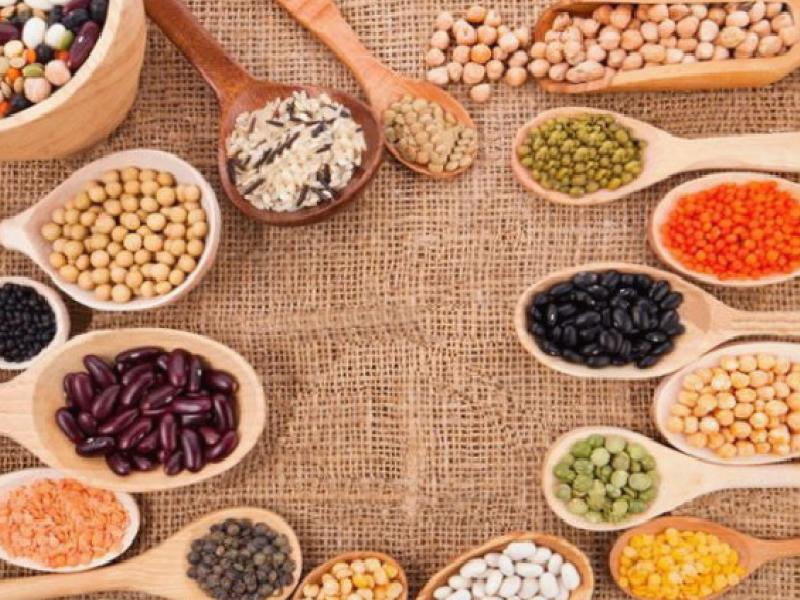
In order to eat healthy, we need to eat both enough and stable. For this, we should include each food set in our diet, paying attention to the food sets and the measures we need to take. One of the most valuable nutritional clusters is legumes. The main legumes we take as food are; lentils, beans, chickpeas, broad beans, black-eyed peas and soybeans. It is recommended to be consumed twice a week for daily pulp size.
GENERAL FEATURES OF DRY LEGUMES
It can be said that legumes generally show the following characteristics, according to their nutritional costs:
-
Legumes are low in fat and rich in polyunsaturated fatty acids.
-
Protein costs are high. They are very adequate sources when there is no meat and eggs in the diet or when there is a fat and cholesterol restriction.
-
In order to increase the protein quality of dried legumes, it should be consumed by mixing with grains.
-
Cooking water should not be poured to prevent loss of vitamins and minerals. In addition, when it is cooked properly, the protein cost increases.
-
Legumes are also a very good source of complex carbohydrates and fiber and naturally contain both cholesterol and fat.
-
Dried legumes are rich in calcium, iron, magnesium, zinc.
-
It is rich in B cluster vitamins except B12.
-
They contain high levels of lysine amino acid.
-
Dried legumes are difficult to digest because of the antinutritional properties they contain. Therefore, cooking is valuable.
COMPONENTS OF DRY LEGUMES WITH POSITIVE AFFECTS
-
Proteins
Dried legumes are a cheap and high-quality vegetable protein source. Studies have shown that vegetable proteins taken instead of animal proteins have a lowering effect on the level of cholesterol in the blood. In legumes, the amino acid lysine is quickly equivalent to beef.
Table 1: Comparison of the amino acid ratio of lysine in the proteins of legumes with wheat and beef
-
oils
The fat content in dried legumes is very low. Therefore, they do not contain cholesterol at the same time. Since they do not contain cholesterol, legumes are heart-friendly and a useful option in preventing cardiovascular diseases. They are mostly polyunsaturated fatty acids in oils and contain high levels of linoleic acid. Therefore, the food costs are high.
-
vitamins
Raw legumes are richer in vitamins than dried legumes. However, peeling the shell of legumes increases the vitamin content. Since water-soluble vitamins (B-cluster vitamins) will be lost with cooking water during cooking, cooking water should not be thrown away and should be used.
-
Folic acid
Folic acid is a valuable vitamin found in the production phase of healthy cells, and it is water-soluble because the B cluster is in the middle of vitamins. Therefore, it does not stay in the body for a very long time. This is why we can say that it is a vitamin that should be taken every day. It is a daily requirement vitamin. It should definitely be taken in the name of not experiencing neural tube disorders, especially during pregnancy.
Edible legumes, especially beans, have enough folate to meet half of the daily requirement in each meal.
-
Mineral Substances
Legumes are quite rich in mineral elements. Minerals found in legumes are potassium, phosphorus, calcium and iron. Since the amount of mineral matter in legumes is reduced when the seed pod is removed, the amount of mineral matter is mixed with the cooking water during cooking, so the cooking water should not be thrown away.
-
Carbohydrates and Dietary Fibers
Carbohydrates are polysaccharides such as sugar and starch. Starch is the most valuable part of legumes and varies according to legume types. The carbohydrate part of the legume performs very valuable functions. These are water absorption, swelling and solubility, gelanization and stickiness, oil absorption and structural characteristics. Cooking facilitates the digestion of carbohydrates. The most valuable part of carbohydrates is dietary fiber, which is the indigestible organic part of food. Dietary fibers are cellulose, hemicellulose, pectin and lignin. These are not just lignin carbohydrates from the middle. We can say that the reason for many diseases such as constipation, diverticulosis, hemorrhoids, diabetes, obesity, bowel cancer and cardiovascular diseases is low fiber consumption in addition to refined foods. For this reason, we should consume legumes regularly and consistently for fiber intake.
In addition to providing calories, legumes are also a source of valuable B-complex vitamins, mineral matters, fiber and vegetable protein that has potential value for human nutrition. Legumes have a high nutritional value with their high protein digestibility and richness in essential amino acids. Benefit from legumes is finite due to antinutritional factors. Phytates, polyphenols, enzyme inhibitors (trypsin, chymotrypsin, α-amylase) and hemagglutinins come in the middle of the antinutritional factors.
A wide range of process techniques such as soaking, boiling, autoclaving, irradiation, cooking, peeling, germination, fermentation are used in attempts to increase the usefulness of legumes with targets to increase the nutritional cost and digestibility of legumes. Wetting, germination, fermentation and autoclaving are the leading processes that affect the reduction or removal of antinutritional factors. In addition, the controlled heat process ensures that the carbohydrates in legumes are partially gelatinized and their digestibility increases, inactivates the antinutritional factors and causes an increase in the rate of benefiting from the essential amino acids contained in the legumes.
HOW TO STORAGE DRIED LEGUMES
Dried legumes are foods with long-term durability, but they should be stored in a dry environment without moisture. Insects, etc., should be taken care of before they are stored. If possible, it should be stored in dust bags or glass jars. It should be stored in a cool, moisture-free and dry place. It should not be exposed to sunlight.
