
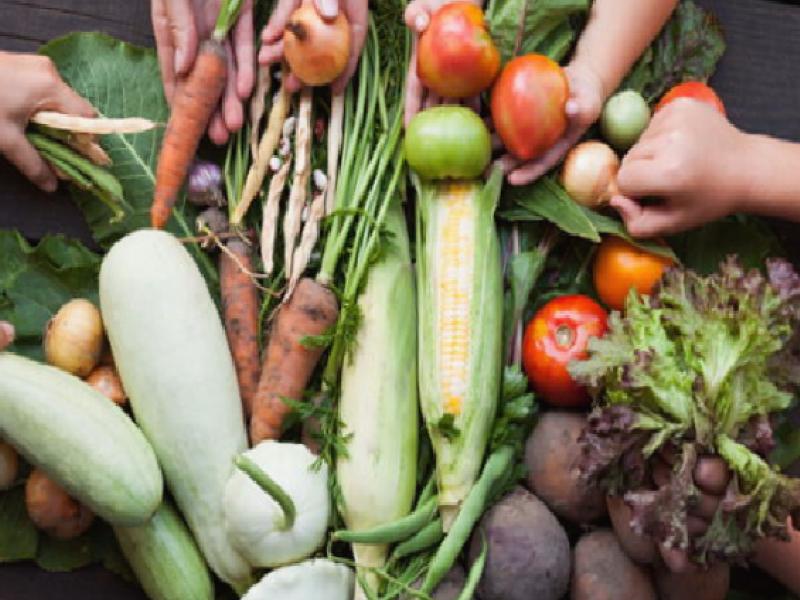
Today, with the increasing population, the need for food has increased. However, the decrease in the resources in the world, the unconsciously increasing consumption and food waste put the future generations in danger. Sustainable nutrition is a form of nutrition with low environmental impact that contributes to the food and nutrition guarantee for future generations.
ENVIRONMENTAL IMPACTS OF FOOD PRODUCTION
Food production and consumption are in the middle of the main causes of environmental degradation. It is stated that agriculture covers 48% of global land use and 30% of greenhouse gas formation is caused by agricultural activities. Animal production, on the other hand, covers 30% of the world’s terrestrial areas and causes 25-40% of the total greenhouse gas formation.
WHAT SHOULD WE DO FOR HEALTHY AND SUSTAINABLE NUTRITION?
DO NOT WASTE NUTRITION!
While 820 million are struggling with hunger on the planet we live in, death rates are increasing due to overweight and obesity. This imbalance in our diet causes more food production than we need and increases food waste.
About 88 million tons of food are thrown away every year in Europe. Waste occurs in all phases of the food chain such as production, process, storage, sale and the end consumer. In fact, green vegetables suffer a loss of approximately 45% until they reach the consumer. Almost half of the produced crop is lost before it reaches the table. Not only that, even the food that is consumed with the intention of not going to waste is considered a waste, because taking more than our body needs is also one of the reasons for waste.
In order to prevent this waste, it is necessary to follow a system that can help reduce food losses and waste. Thus, increasing food demand will be met in a healthy and sustainable way.
EDIT YOUR NUTRITION!
Research has shown that dietary change is one of the most powerful ways to increase the sustainability of food systems. Of course, there is no generalized diet for every individual, but even small changes in our eating habits will contribute to sustainable nutrition.
Meat has a great place in our nutrition culture, especially in the Central Anatolian region. You can start by changing that. The production of animal foods requires more resources than the production of plant foods (such as land use, water consumption and CO2 emissions per production unit). As a result, it has more negative effects on the environment. Eating only plant-based sources is not an analysis either. What is valuable is to consume foods of animal origin such as meat, dairy products and eggs without wasting them and as much as we need them. In addition, a diet loaded with plant foods is a very good option for sustainable nutrition and to improve general health (blood pressure, cholesterol, cancer, etc.).
Small steps, such as consuming as much food as our body needs, choosing half of the plate from vegetables and fruits in our meals and the remaining half consisting mostly of vegetable protein sources and whole grains, can significantly change the environmental consequences of nutrition on a global scale.
